
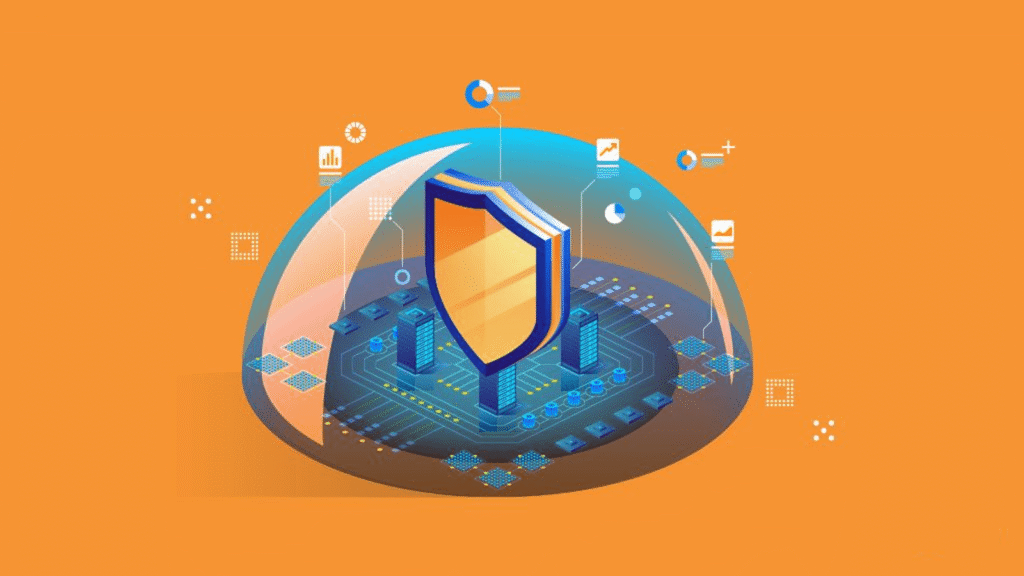
In this digital world, everything grows rapidly. Everything is driven by ‘data’. Data becomes essential to organisations in every industry. You must be watchful when data is accessed. Every organisation should learn about Data Loss Prevention, or DLP. It can help protect your data against cyberattack, which can happen at any time.
Amount of data worldwide has enormously increased. International Data Corp (IDC) estimated that ‘Worldwide data will grow to 163 zettabytes by 2025’. If the data is stacked, it could get you 100 million round trips to the moon.
The ubiquity of data is tempting to cybercriminals. It can bring about various forms of threats such as data breach, data theft, ransomware, extortion, and identity theft.

Approximately, 20% of cybercrime is data breach. It occurs because many organisations do not have sufficient cybersecurity. DLP is a solution to preventing data breach. Let’s learn about DLP.
What Is Data Loss Prevention (DLP)?
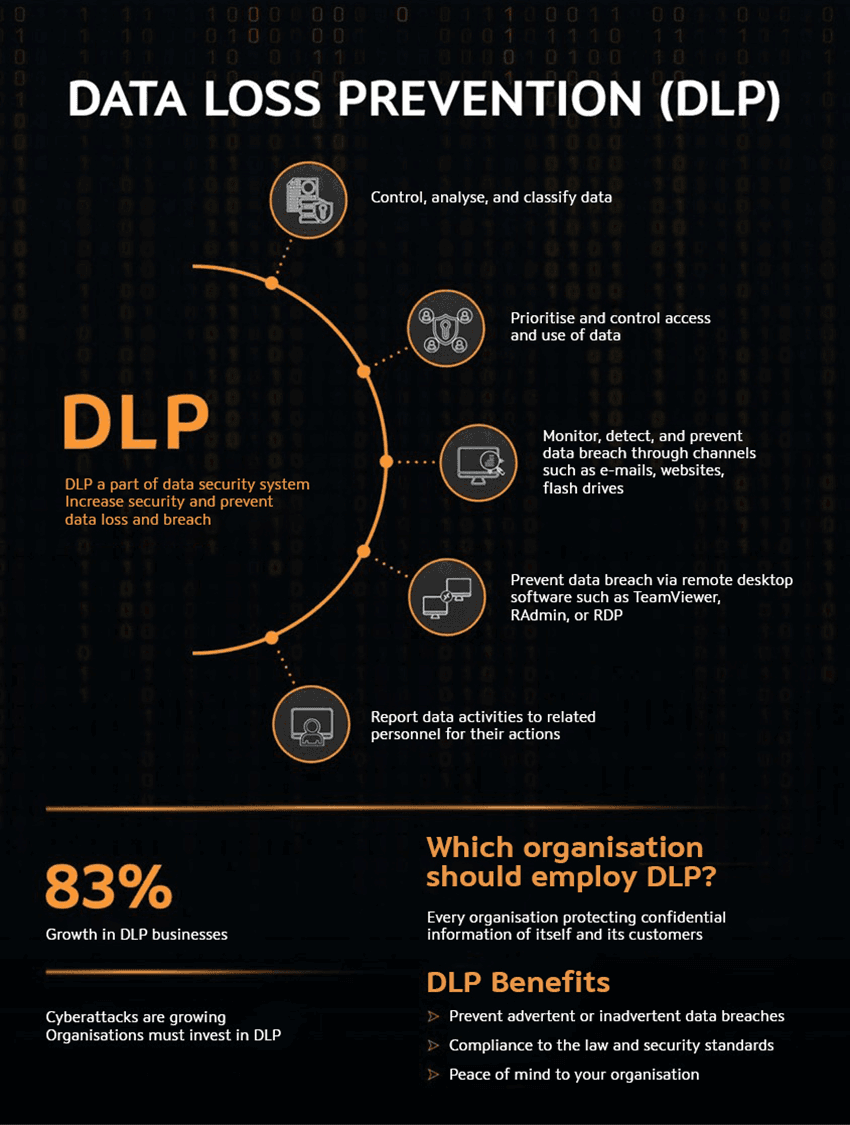
Data Loss Prevention (DLP) is a part of security system protecting your data. DLP helps prevent data loss and breach, reducing risks in case your organisations fall victim to cybercrime committed by external or internal parties.
DLP integrates technology, hardware, software, strategies, and processes to prevent unauthorised access to sensitive data. In addition, DLP is a preventive tool system administrators can use to filter out and detect suspicious behaviours, making your organisation’s data more secure.
Examples of sensitive data include financial records, customer databases, contracts, and confidential information on plans and products.
DLP monitors data in all 3 statuses – data in use, data in motion, and data at rest. Data Loss Prevention will monitor every data action. It reports any irregularities to help prevent possible breaches.
- Data in use refers to data users are using within networks, programmes, or applications.
- Data in motion refers to data being sent from sources to endpoints.
- Data at rest refers to data stored on desktop PCs, laptops, electronic devices, and cloud.
Why Organisations Should Employ DLP?
An alarming fact is no organisations can be spared from cyberattacks. Data loss, data breach, and data theft happen all the time. 2021 records show that an organisation falls victim to cybercrime every 11 seconds. In addition, 20% of cyberattack source is internal (Verizon’s 2021 Report).
Regardless of how well cyber protection is, there are still security holes caused by internal personnel or external partners. In addition, the more popular work from home environment which increases the reliance on SaaS (Software as a Service) software managed via clous such as Microsoft 365, Google Workspace, or Salesforce, as well as the BYOD (Bring your own device) trend contribute to higher risk of data loss.
DLP is a system that helps monitor data use and communications – internally and externally. It reports who does what, where the data is, and how it is used. If there are suspicious activities, related personnel can prevent them promptly, keeping the data secure.
Globally, demand for Data Loss Prevention has increased. It is estimated that, in 5 years, revenues of DLP-related businesses will grow 83% The majority will come from big corporations. The number clearly indicates the increase in cyberattacks, making cybersecurity and data breach protection more important.
- Data Security from flagging and reporting suspicious activities, preventing possible damage from misuse of information.
- Data breach protection. DLP lets you know data statuses – be it in use, at rest, or in motion.
- Increased reliability. Organisations with good DLP become more reliable in eyes of partners, employees, customers. They feel safer to leave their information with the organisations.
- Compliance to the law and standards. There are regulations requiring public and private sectors to increase security of and to be more vigilant in keeping end-user information. Those regulations include PDPA, GDPR, SOX, and HIPAA.
Tips for Organisations
If organisations whose businesses are related to sensitive data such as financial or personal information falls victim to cyberattacks, there will be social and legal consequences if you do not have cybersecurity solutions or DLP implemented.
DLP Mechanisms
1. After DLP implementation and programme installation, experts will control, analyse, and classify data to prioritise and set access rights. They will also monitor data actions. In this step, you can choose how to manage each data type as well as how secure it should be.
2. When users interact with data – filling in, sending, receiving, encrypting, copying, or scanning, DLP verifies each action originated from every channel – e-mail, apps, websites, social media, cloud, servers including internal apps and servers, devices including phones, PC, laptops, and flash drives.
3. If users attempt unallowed actions, DLP will flag and report suspicious activities to ‘data monitoring administrators’. They can be humans or humans working with AI.
4. The administrators assess the situations and decide whether to allow the actions, cancel requests, block access, verify, or request verification from the users.
DLP’s benefits include protection of files from when they are stored inside the organisation until they leave. DLP does not affect regular workflow. When it detects suspicious activities such as sending data to dubious endpoints, unrelated personnel copying data, suspicious encryption, or external devices accessing internal data, it will send reports administrators so they can verify or prevent the activities. This simple action can mitigate damages to organisations.
Which Organisations Should Employ DLP (Data Loss Prevention)
Organisations that should employ DLP include those needing to protect sensitive data, those with confidential information or strategies, those with privacy policies protecting information of end-users, partners, and personnel in compliance with PDPA.
Summary
In the era where data is as valuable as money, organisations are constantly at risk of being attacked. They need to value cybersecurity, especially Data Loss Prevention (DLP). It is your shield protecting advertent and inadvertent data breaches.
If you are looking for professional cybersecurity services to help your organisation prepare for cyberattacks and data loss, G-Able’s G-Security is the comprehensive solution, integrating technologies, people, and processes.
We are a one-stop service provider to help your organisation prepare for security threats.