
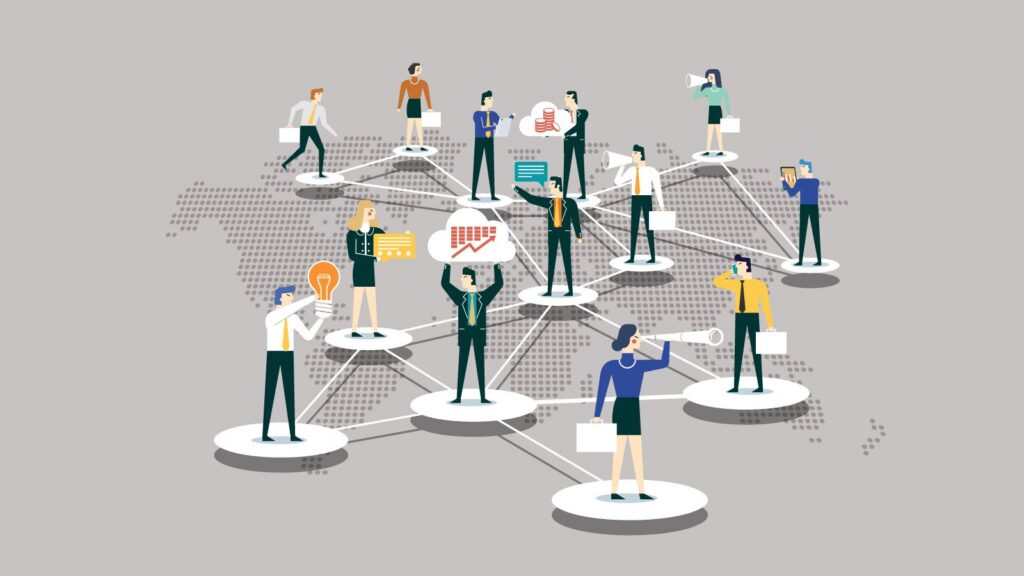
MarTech – One of the most essential parts of the business is marketing. Thus, companies need to pay attention and keep a reasonable amount dedicated to their marketing strategies. In addition, with automation, marketing technology plays a vital role. Businesses need a plan ready to embrace new technologies and employ them in their marketing strategies.
You cannot ignore technology and expect that your businesses will grow. Technology changes ways products are bought and sold. It has a direct impact on marketing. Thus, it makes sense for companies to understand changes in technology and implement them in marketing strategies!
Understanding Martech Better?
Martech is a technology designed to help businesses achieve their marketing goals. First, it helps design efficient strategies to market your products with increased customer satisfaction.
Second, it helps marketing teams to assess, create, and advertise products efficiently and economically. In short, martech includes AI, analytics, and digital realms which increase marketing efficiency.
Importance of Technology in Marketing
The quickly evolving technology has a direct impact on businesses. Even the marketing industry needs upgrades and new tactics to employ technological potentials. Marketing technology helps companies create healthy relationships with customers, establish effective communications, and allow cohesive growths. It also helps businesses develop efficient and economical ways of marketing products.
4 Reasons Technology Is Crucial to Marketing
1. Keeping Up with Competitors Technologies affect business cultures, relationships, and security. Martech helps you match steps with competitors. It might even take you ahead. It gives value to your customers to see that you are adopting the latest technological trends in your businesses.
2. Creating Effective Communications Effective communication are essential to success in marketing. Martech ensures your communications with your customers, and provides quick answers to queries. It also offers better interactions and speeds up delivery processes in different geographic locations.
3. Operations Efficiency With the help of technologies, businesses can accelerate their operational processes. For example, marketing technology helps you understand business processes faster as well as save resources and money. In addition, it helps manage warehouses, customer relations, and finances efficiently.
4. Research Capabilities Brands must explore new growth opportunities in order to build successful businesses. Technologies provide business insights and credible data to improve marketing strategies. Martech gives a virtual market views and future patterns for designing new strategies.

How Technologies Impact Your Marketing Strategies
Before you decide to employ marketing technologies, you must know their impacts and uses. For example, today, you don’t have to invest money in traditional marketing like newspaper ads, TV commercials, or billboards. These are a few ways where technology can make an impact on your marketing strategy.
1. Website Creation
Websites with quality play a vital role in promoting your businesses. They are economical and more effective way than physical marketing. In addition, it helps your brand reach various audiences.
2. Digital Marketing
Because of its many benefits, digital marketing has been adopted by various businesses. It plays an important role together with social media to help promote brands. This way, martech enhances its reach with target groups. It lets you engage with audiences and know what your customers want from your brand.
3. Search Engine Optimisation (SEO)
SEO plays an essential role in promoting your content and adding visibility to your brands. If it does not appear on the first page of SERP, any content will be a wasted effort. Marketing technology helps you design the right content which is optimised for search engines. This way, you can improve your rankings and attract more visits. In addition, it also generates leads for your business growth.
4. Content Marketing
Content marketing is a good way for marketers. It is a proven method and is employed by more than 90% of businesses worldwide. With martech, there are plenty of options to boost your content creativity and engagement.
Apart from being indirect marketing, it is also used to improve SEM and SEO. Thus, businesses must employ technologies in their content strategies to become leaders and further take advantages.
5. E–mail Marketing
E–mail marketing is the best way to increase your brand loyalty. More than 80% of people accept that they may skip their messages, but they read e–mails. Thus, marketing technology must be designed to deliver series of e-mails to customers from the initial stage to after-sales services. A good example is what Amazon and other e-commerce platforms are doing.
These are 6 exciting martech trends influencing marketing technology in 2023, which you will need for successful martech strategies
1. The increase of zero-party data gathering
Big data becomes more important for organisations than ever. Global privacy regulations requires changes to our data collection methods.
In 2023, a prominent trend in digital marketing will likely include organisations getting more proactive in data collection. Form design, for example, may be used to acquire customer data that might impact the launch of your next product or service. Forms may be brief and concise to maintain user engagement. In addition, it has a higher success rate in acquiring conversion-relevant data.
2. The need to become video-first
Because it can hold viewer’s attention longer than static postings, video-first content becomes an increasingly important priority area in social media marketing. Marketers are employing bite-sized videos, such as TikToks and Instagram reels, to boost engagement and brand exposure amongst millennials and Gen Z. Instagram actively tweak its algorithm to favour reels, and give video creators greater visibility over those with only static content
Looking promising as an excellent marketing strategy is live streaming. When combined with influencers, live streaming enables prospective buyers to interact with advocates/experts acquainted with the product, discuss its pros as well as maybe some of minor cons, and make purchases whilst watching videos.
3. SSP and DSP combined
The difference between buy- and sell-facing adtech organisations become more blurred. Trade Desk, the biggest independent DSP (demand-side platform) in the market, suggests complete and direct integration with premium publishers in 2022. On the other hand, supply-side platforms (SSP) increasingly establish agreements with media agencies, which is something DSPs historically supports.
In 2023, programmatic platforms will need to diversify their revenue models and to build ecosystems linking customers, sellers, producers, data platforms, and everything in between. SSPs must consider deploying buy-side capabilities via customised DSP development.
4. No-code as the goal for digital marketing
No-code technology becomes a crucial asset for every kind of businesses. These martech trends show no signs of stopping. According to Gartner’s studies, by 2025, 70% of newly built enterprise apps will employ low-code or no-code technology. This surpasses app development.
As parts of the no-code trend, solutions for making web questionnaires, pages, bots, and workflows may be created without writing a single line of code. Throughout 2023, no-code solutions will develop from ‘basic’ uses, such as landing page creation, to more complex uses like building a partner directory or doing data analysis.
5. Holographic ads
In the past, holograms were featured in science fiction and dystopian cinema. However, this vision is becoming reality. Holographic technology is here to stay.
Holograms are ideal marketing tools for companies seeking to showcase their brands and improve overall customer’s brand awareness. This advertising technology helps users display moving and interactive photos and objects in 3D.
In a climate where conventional and digital advertisements are ubiquitous, hologram advertisements stimulate customer’s interests. Thus, this may help businesses become viral and boost brand recognition.
6. Multilingual marketing by design
Most online data is published in English, which limits its reach. Most non-native English speakers use online translation tools, which may translate and brand your material incorrectly. Because of this, production of multilingual material is increasing, especially with quick development and widespread availability of machine translation (MT).
Summary
However, too much dependence on MT may lead to the same outcomes — oftentimes erroneous — as online translation systems. Thus, machine translation post-editing, or MTPE, has gained widespread popularity amongst digital marketers because it combines modern technology with the expertise of local translators in order to create multilingual materials which successfully expresses marketing messages.