
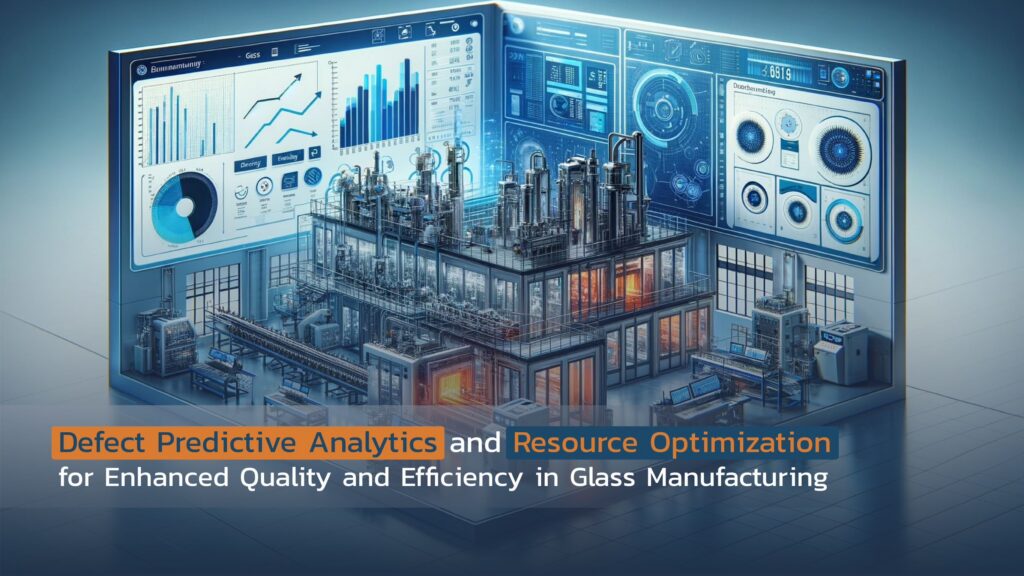
In the realm of manufacturing, particularly in glass production, the significance of data analysis can’t be overstated. It’s the cornerstone of enhancing both quality and efficiency, leading to optimized operations and cost-effectiveness. The following success story of our client in the glass manufacturing industry exemplifies this approach.
Client Challenges
Our client faced a critical issue in their glass production process – improving operational efficiency by predicting defects that might occur within the next 8 hours. This was essential not only for enhancing the quality of the flat glass but also for optimizing the use of resources, thus reducing operational costs.
How We Have Helped
We tackled these challenges by deploying advanced analytics processes on the AWS platform. This involved data preparation and the development of machine learning models aimed at predicting the number of defects and calculating the optimum value of resource consumption. Our approach allowed the engineering team to adjust production parameters for maximum operational efficiency, significantly enhancing the decision-making process. Key components of our solution included:
- Integration, processing, and visualization of data on the AWS Platform.
- Development of machine learning models by our data scientists to support business objectives.
- A defect prediction and root cause analysis dashboard.
- Strategies for resource optimization.
- A web application for the engineering team to simulate various defect scenarios in relation to resource optimization.
Result
The application of our machine learning model led to significant improvements in operational efficiency in glass production. We enabled the engineering team to fine-tune production parameters, aligning them with the current production environment. This predictive approach to defect identification and resource optimization was pivotal in reducing operational costs and enhancing the overall quality of the glass production process.
Through this success story, it’s evident that the integration of data analysis and machine learning in manufacturing is not only beneficial but essential for the modernization and efficiency of production processes.